PC stranded wire - What does the production process look like?
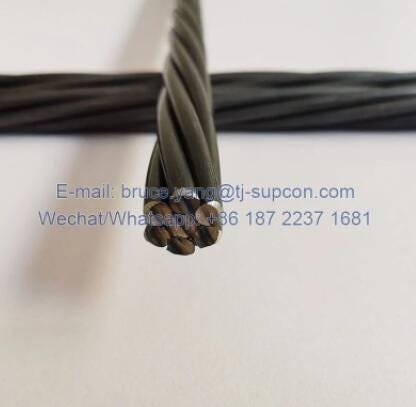
PC stranded wire, i.e. prestressed concrete strand, is a steel strand made of 2, 3, 7, or 19 high-strength steel wires stranded together and used for prestressed concrete or similar purposes by eliminating (stabilizing) the stress effect. PC stranded wire is mainly used for concrete structures such as railroads, highways, bridge crane construction, multi-story industrial plants, etc. The products have been widely used in railroad, highway, bridge, and other large Project construction. The main characteristics of the prestressing strand are high strength, good relaxation performance, and relatively straight at other times. Common tensile strength grades are 1860 MPa, as well as 1720, 1770, 1960, 2000, 2100 MPa, and other strength grades. This steel also has a higher yield strength.
Step 1
The raw material used is 1080 carbon wire. It is a hot rolled coil product with an alloy that has the desired tensile and ductile properties. Typically, the steel used to make PC stranded wire is between 3/8" — 1/2" in diameter and weighs between 1.6 NT — 2.8 NT.
Step 2
Once the raw material has been purchased, the production process can begin. The first step of the process is the wire descaling and pre-coating. Iron oxide (ferrous oxide) is present on the surface of the bar and needs to be removed mechanically or chemically before production.
Step 3
Pickling is a chemical removal method where the bar is placed in an acid bath and the chemical reaction causes the rolled steel oxide to come off. After pickling, the bar will be coated with a textured coating to promote lubricating adhesion during the upcoming stretching process.
Step 4
PC stranded wire is available in a variety of diameters, so the next step in the process is to draw the wire to the desired diameter through a series of 8 or 9 progressive carbide dies. This is a cold process, so great care must be taken to avoid premature die wear and steel damage. During this process, the cross-sectional area of the wire is reduced by about 85%. The tensile strength of the wire when a wound is typically around 172ksi. With this drawing process, the steel is work-hardened to the required tensile strength of >270ksi. The diameter of the wire is tightly controlled to maintain very tight tolerances.
Step 5
Once the seven spools have been drawn to the desired diameter, they are loaded into the stranding machine. According to ASTM 416, six outer wires and one slightly larger diameter monofilament are required. The stranger pulls the wire from the spool while maintaining the specified twist rate. The twist rate controls the twist of the stranded wire to comply with ASTM 416. After the conductor is stranded, the strand is subjected to high temperatures while releasing residual tensile stresses under tension, permanently elongating the strand, increasing yield strength, and reducing relaxation losses. The combination of these steps results in strands with a very consistent modulus of elasticity up to and exceeding 80% of the ultimate strength of the strand. Finally
Step 6
At this point, the strand is in the field, but it is in an unmanageable 20–27 net tons of the main coil. It is now rewound into the desired package size, typically 3.0 to 3.5 net tons. The sample will be cut for testing and the material will be bundled and packaged for shipping.
Step 7
The samples cut in the final step are sent to the lab for testing by ASTM 416. These tests include ultimate tensile strength, total elongation, yield point at 1% elongation under load, strand diameter, minimum diameter difference between the center and outer wires, strand length and strand area, and modulus of elasticity.
We are a supplier of PC stranded wire, please feel free to contact us if you need it.
Steps:
Step 1
The raw material used is 1080 carbon wire. It is a hot rolled coil product with an alloy that has the desired tensile and ductile properties. Typically, the steel used to make PC stranded wire is between 3/8" — 1/2" in diameter and weighs between 1.6 NT — 2.8 NT.
Step 2
Once the raw material has been purchased, the production process can begin. The first step of the process is the wire descaling and pre-coating. Iron oxide (ferrous oxide) is present on the surface of the bar and needs to be removed mechanically or chemically before production.
Step 3
Pickling is a chemical removal method where the bar is placed in an acid bath and the chemical reaction causes the rolled steel oxide to come off. After pickling, the bar will be coated with a textured coating to promote lubricating adhesion during the upcoming stretching process.
Step 4
PC stranded wire is available in a variety of diameters, so the next step in the process is to draw the wire to the desired diameter through a series of 8 or 9 progressive carbide dies. This is a cold process, so great care must be taken to avoid premature die wear and steel damage. During this process, the cross-sectional area of the wire is reduced by about 85%. The tensile strength of the wire when a wound is typically around 172ksi. With this drawing process, the steel is work-hardened to the required tensile strength of >270ksi. The diameter of the wire is tightly controlled to maintain very tight tolerances.
Step 5
Once the seven spools have been drawn to the desired diameter, they are loaded into the stranding machine. According to ASTM 416, six outer wires and one slightly larger diameter monofilament are required. The stranger pulls the wire from the spool while maintaining the specified twist rate. The twist rate controls the twist of the stranded wire to comply with ASTM 416. After the conductor is stranded, the strand is subjected to high temperatures while releasing residual tensile stresses under tension, permanently elongating the strand, increasing yield strength, and reducing relaxation losses. The combination of these steps results in strands with a very consistent modulus of elasticity up to and exceeding 80% of the ultimate strength of the strand. Finally
Step 6
At this point, the strand is in the field, but it is in an unmanageable 20–27 net tons of the main coil. It is now rewound into the desired package size, typically 3.0 to 3.5 net tons. The sample will be cut for testing and the material will be bundled and packaged for shipping.
Step 7
The samples cut in the final step are sent to the lab for testing by ASTM 416. These tests include ultimate tensile strength, total elongation, yield point at 1% elongation under load, strand diameter, minimum diameter difference between the center and outer wires, strand length and strand area, and modulus of elasticity.
We are a supplier of PC stranded wire, please feel free to contact us if you need it.


评论
发表评论